



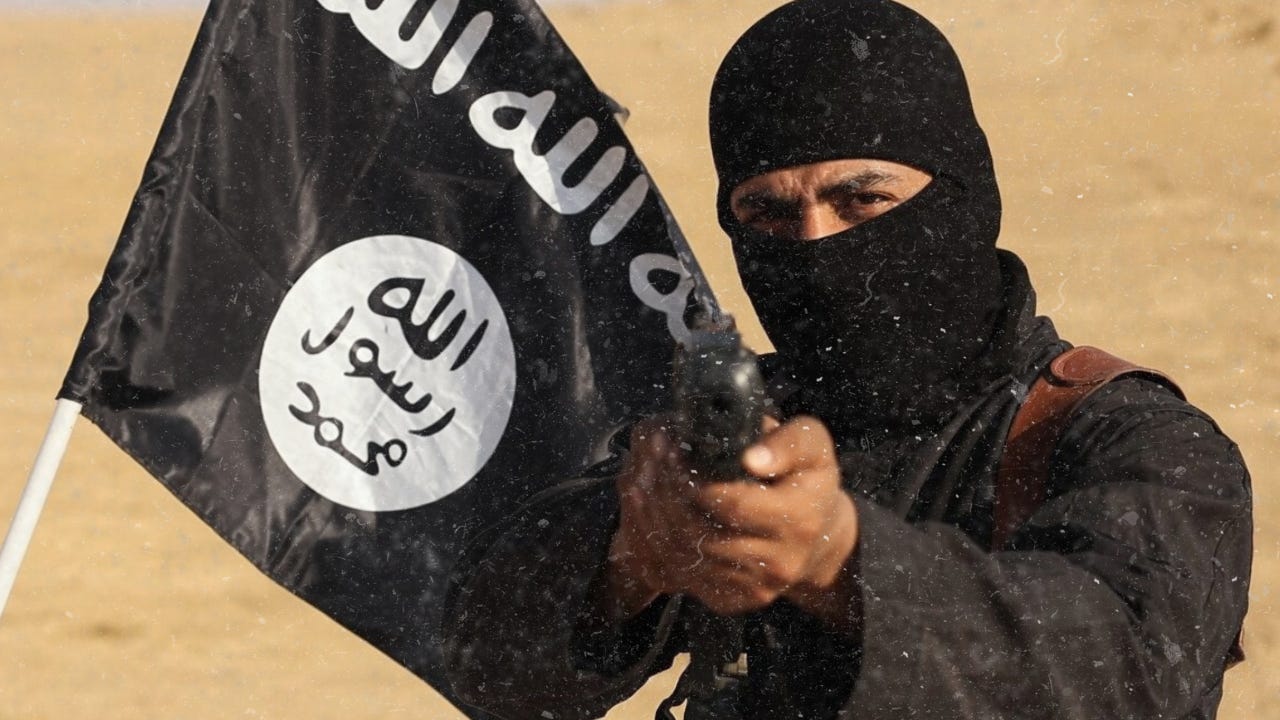
Two months after al-Qaeda terrorists blew themselves up along with 3,000 innocents, the late Christopher Hitchens wrote a caustic piece for The Atlantic.
His target was not the mostly educated men who had bought one-way tickets to an imagined paradise - though he reserved a special hatred for them - but Hollywood’s then left-wing darling, Oliver Stone, with whom he shared a panel at the New York Film Festival less than a month later.
When asked to comment on the September 11 terror attacks, the filmmaker described them as a “revolt”.
Hitchens was neither surprised by Stone’s remark nor by how well the liberal audience lapped it up, for such expressions of self-hatred had become commonplace on the left.
He then launched the first of many public attacks on Professor Noam Chomsky, the linguist who first rose to prominence as an outspoken critic of American foreign policy during the Vietnam War.
For Chomsky, Hitchens wrote in his column, “everything these days is a ‘truism’; for him it verges on the platitudinous to be obliged to state, once again for those who may have missed it, that the September 11 crime is a mere bagatelle when set beside the offences of the Empire. From this it’s not a very big step to the conclusion that we must change the subject, and change it at once, to Palestine or East Timor or Angola or Iraq”.
In other words, every spasm of violence must be weighed against America’s own blood-stained ledger. It naturally follows that September 11 was not a unique act of terror but an inevitable response to a world made infinitely more dangerous by Western imperialism.
The central flaw in this way of thinking is that it doesn’t price in what it actually takes to fly a hulking mass of metal into a building at 500 miles per hour - and to look forward to doing so.
The calculus changes when you realise what a sincere commitment to jihadism actually entails, namely the doctrine of martyrdom and the promise of entry into paradise.
It doesn’t make it any easier for non-believers to swallow, mind you, but it’s a starting point. Or not. Much easier to retreat into half-baked theories about imperial conquest and all the geopolitical grievances that come with it.
The trouble is, these specious explanations leave secular Western societies vulnerable to attack.
Take war, which has historically been fought on the assumption that both sides value life equally. A sincere belief in martyrdom upends these rules entirely. For an enemy who is more eager to die than you are to live is hard to defeat militarily, let alone negotiate with.
Islamists are acutely aware of this asymmetry. In fact, it gives them a tactical advantage on the battlefield.
History is littered with examples. During a prolonged military conflict between Iran and Iraq in the 1980s, the Iranian government mobilised large numbers of teenage volunteers and some younger children through the Basij, the paramilitary wing of Iran’s Islamic Revolutionary Guard Corps (IRGC).
Inculcated in the ways of martyrdom, these young boys hung symbolic “keys to paradise” around their necks before heading to the front line for the first “human wave” of assaults, clearing the minefields so regular forces could advance.
Hitchens’ support for the War on Terror should be understood within this context. He was writing immediately after one of the worst displays of this barbarism. Although there is much to criticise about the open-ended counterinsurgency and nation-building that followed, he was right.
For this is a civilisational clash between open and closed societies, and no amount of moral equivalence or sophistry will convince me otherwise.
Islamists and their useful backers in the West are fond of saying that any military response to acts of terror is doomed to fail; jihadism is an ideology that cannot be vanquished. At best, it’s driven underground before re-emerging in a more radical form.
Yet this argument ignores the events of the 20th century, when two fanatical belief systems were effectively bombed out of existence. Both nations are now peaceful allies.
The defeat of Imperial Japan arguably provides a more compelling case study than Nazism because, like the adherents of radical Islam, the Japanese had cultivated a culture of self-sacrifice in which thousands of young men deliberately flew aircraft into enemy ships in suicide missions.
To many Allied observers in 1944–45, these kamikaze pilots demonstrated a level of ideological commitment that made compromise or deterrence seem impossible. Nevertheless, Japan was defeated, occupied, and utterly transformed through brute military force. Within a generation, the same society that had produced suicide pilots became one of the world’s most peaceful allies.
Unfortunately, the case for defeating jihadism still needs to be made as it’s not clear which side is currently winning the war of ideas. That reality came crashing down on the morning of October 7, 2023.
As dawn broke, Hamas launched a surprise assault on Israel that began with a large-scale rocket barrage and ended with the rape and murder of 1,200 innocents and the capture of 250 more.
Watching the crowds in Gaza celebrate as bloodied hostages were paraded through the streets reminded me of the scenes of jubilation in Arab camps following 9/11.
As they did then, the usual suspects rushed to defend Islamists, branding the murderous rampage on Israeli soil an act of “resistance” against “occupation”.
I’m not going to go down the rabbit hole of who has the stronger claim to the land between the Mediterranean Sea and the Jordan River - I’m not a scholar of the Middle East. Besides, both sides have their own accounts of history, and these differences will never be reconciled.
The more salient point to consider is one made by Sam Harris in his illuminating Substack essay titled ‘Why I Won’t Debate Critics of Israel’. In that essay, Sam posed the rhetorical question: ‘What would each side do if it had the power to do whatever it wanted?’
This is where the differences between specific belief systems come into sharp focus. By zooming in on what either side holds to be true about the world and its place within it, the moral distinction between believers and non-believers becomes clear.
It also informs the response. If Hamas' actions on October 7 were rooted in regional concerns, this opens the door to negotiation. If the group was acting on heavenly instruction, there can be no off-ramp.
On the latter score, the evidence is overwhelming. What else explains the blissed-out pleasure Hamas took in mutilating and raping their way through a dance festival and the ease at which they use civilians as human shields?
Think what it takes for a normal person to commit such acts of cruelty. To completely violate every moral code by which they abide. Then imagine thousands of people doing exactly that all at once. Are they all psychopaths? Seems doubtful. They are clearly running on different software.
Perhaps it was Hamas’s late leader, Ismail Haniyeh, who summed it up best when he crowed: “We love death like our enemies love life!”
And yet, anyone left of centre appears to view Hamas as a rational actor driven to violence by Israeli aggression and expansionism.
I have devised a quick thought experiment to test this theory. Answer the following questions:
What hand did the only Jewish state have in the genocide against the Yazidis in 2014, when ISIS ordered men to either convert or die and women were taken as sex slaves?
How about the campaign of terror being waged by ISIS’ affiliates across Africa? Is this the result of settlers in the West Bank? How about American foreign policy?
The fact that the targets and locations change but the medieval methods stay the same - just with varying degrees of depravity - proves that Islamist doctrine is the salient variable behind a jihadi terror attack.
Moreover, we have endless examples of Islamists spelling out their intentions and then directly acting on them. It’s written in Hamas’ genocidal charter, in the al-Qaeda manuals and in Dabiq, ISIS’ English-language propaganda magazine.
And yet liberals maintain that these fanatics are not meant to be taken at their word - a view unmoored from reality.
As Hitchens’ pithily wrote in that December 2001 issue of The Atlantic: ‘I believe I know an enemy when I see one.’
Do you?

Islamism = Radical Islam is a fantasy equation. ALL tendencies in Islam are radical because ALL Moslems share the same ultimate end...TO REJOIN THEIR GOD IN PARADISE...the many currents in Islam are just expressions of different means / methods towards the above universal / eternal end. There's no need to get buried in the labyrinth of Arabic language or Islamic theology to grasp this. The Western philosophical tradition can tell critics of Islam all they need to know.
A frightening summary of what we all need to know and be vigilant of. These facts are not being acknowledged by our ruling classes and they are exposing us all to the worst dangers every day and most of the public are ignorant of. A brilliant piece, thank you Outpost, keep bringing us more of the same, we have a war to win.