



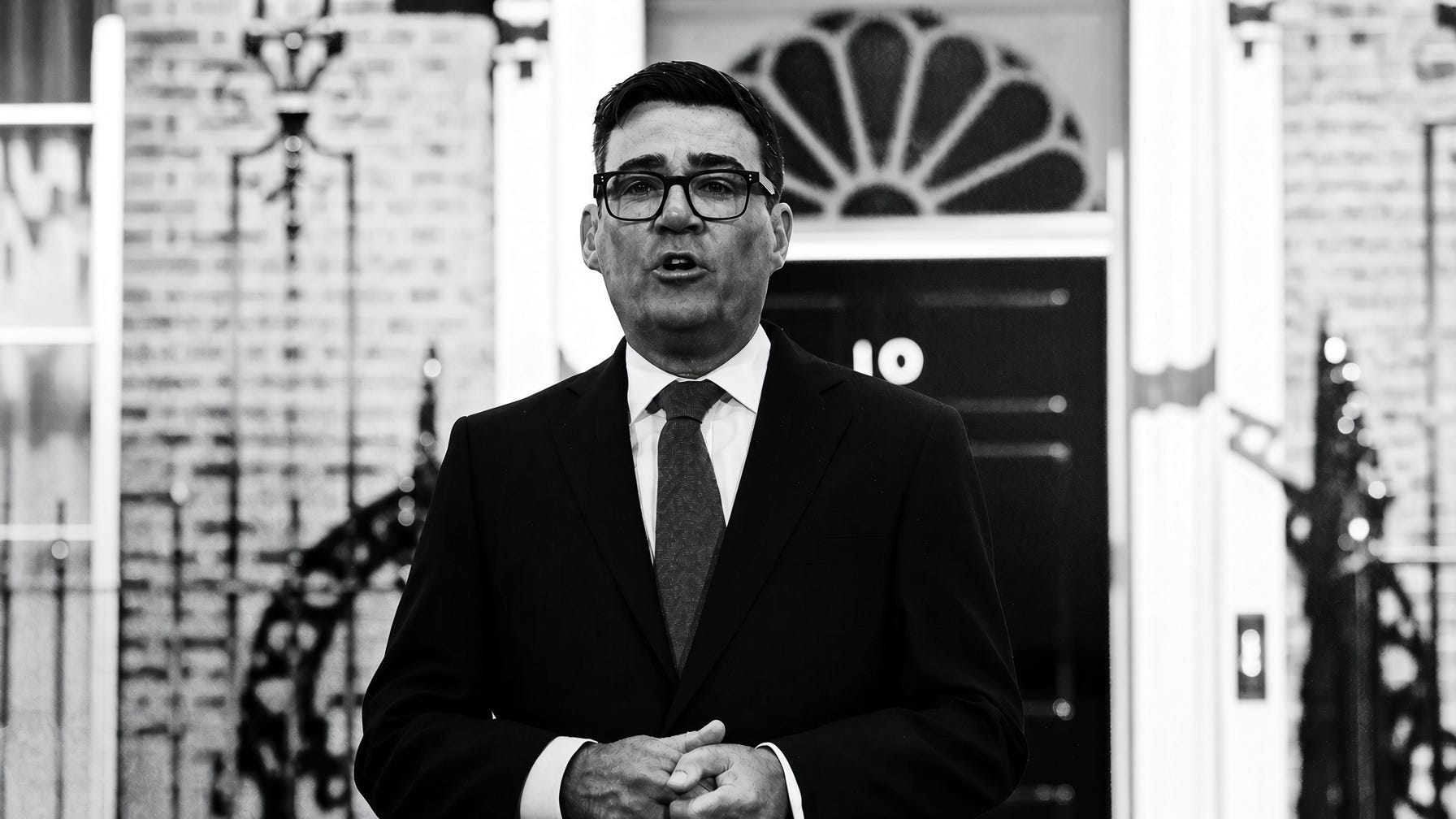
Andy Burnham is considering exempting foreign care workers from Home Secretary Shabana Mahmood’s planned visa crackdown, which would extend their route to permanent residency from five years to ten, as part of his proposal for a new National Care Service.
Care workers were one of the largest groups who came in the so-called “Boriswave”, which saw unprecedented levels of legal immigration under former Prime Minister Boris Johnson. It has been calculated that 1 in every 25 people in the UK today came between 2021-24.
Between 2022 and 2024, the government issued 249,594 main visas on the Health and Care visa, with another 366,672 visas issued to dependants. Under the current rules, they will be eligible for permanent residency after five years of work, a deadline that many will soon reach. Estimates of the long-term fiscal cost vary, but they are often in the billions.
Carving out an exemption for care workers is poor policy, not least because the evidence is that low-skilled workers like them will switch jobs once they have residency. That means that any exemption to benefit the care sector will likely only be temporary.
Once they have residency, it only takes another year, a few fairly easy tests and a small fee to acquire citizenship. Currently the language requirement is only B1 level, which is the intermediate level where you can write basic emails but would struggle with anything more complex. Once they are British nationals, such people and their children will be a permanent part of the nation.
The most recent immigration statistics show that in the year ending March 2026, there were 237,000 grants of citizenship. That’s actually a decline from last year, when numbers were closer to a quarter of a million. Such huge numbers mean that the country is changing fast, yet there is very little debate about the subject.
That is typical of British immigration policy. Before the Second World War, nearly everyone in the British Empire was a British subject, able to move around largely freely. The high cost of travel and the lack of any welfare state meant that in practice very few people did, with much more emigration from Britain than migration to it.
Following the end of the war, the Dominions began to develop their own citizenship laws, which necessitated working out what British citizenship meant. A classic compromise was created, allowing Commonwealth citizens to have many of the same rights as British citizens. New waves of migration, initially Afro-Caribbean but followed by South Asian, led to political anger over the issue of immigration and a tightening of the immigration laws by the 1970s.
Having substantially restricted immigration, the subject once again receded from public interest. Then in 1997, New Labour inaugurated a period of mass immigration which resulted in levels of net immigration never again dipping below 100,000 a year (except during COVID).
Many of those migrants have subsequently been granted citizenship. Although the case of Alaa Abd El Fattah is exceptional, it is also indicative of the lack of care taken when it comes to British citizenship. Despite only having a tenuous link to the UK, the Egyptian dissident was granted British citizenship. The discovery of years of anti-British and anti-white postings on social media didn’t affect that. Having already made him a citizen, the government argued that revocation of that citizenship should require a high bar, such as fraud or being a national security threat. Easy to grant, hard to revoke.
At the same time, the post-war compromises meant that privileges reserved for citizens in many countries are available to foreign nationals here. They can be part of a jury, vote in British elections, and even win political office in some parts of the UK.
In a democracy, voting is the exercise of political power. It may have been an acceptable privilege to grant voting rights to the few Commonwealth citizens here in the immediate post-war period, but it is clearly incompatible with having a population of 6 million foreign nationals, a substantial portion of whom are Commonwealth citizens.
News that the government may introduce mandatory electoral registration and compulsory voting should therefore be a concern. Currently, resident Irish and Commonwealth citizens are all eligible to vote and therefore would, along with British citizens, face fines for failing to vote if voting were made compulsory. That could mean that a future general election victory might be decided by the votes of foreign nationals forced into the polling booth by the British government.
There is therefore an urgent need to reform the way that citizenship works in Britain. First, there should be no automatic assumption that coming to Britain for work or asylum means eventual citizenship.
Secondly, the barriers to citizenship should be raised, to ensure that it is granted to those who truly earned it and wish to become fully British. Thirdly, the privileges granted to some foreign nationals should be revoked and political power placed only in the hands of British citizens.
We do not want foreign care workers. Too many can’t speak English well if at all..Their understanding of care needs especially the elderly is lacking in comprehension. I speak from personal experience of two family members who received awful treatment from them.. Older people are often partially deaf and can’t understand their dialects. No consideration is given to the patient. It has to stop! We need to train our own people with good English and pay a living wage that they can survive on.
Excellent article Guy. Burnham is so shit scared of losing the muslim vote he will not do anything that upsets his Islamic pals I am convinced he is partial to the grooming gangs.How do you think he lasted so long as Manchesters mayor.